
Rethinking America’s Solar Farms


One of the major aspects of the green movement is to turn away from the large fossil fuel corporations that harm our environment, deteriorate human health, and use up finite resources at an unrelenting rate. In response, many Democrats have advocated for the manufacturing and development of renewable energy sources. This sounds like a perfect solution. It lowers the amount of carbon released into the atmosphere, creates less risk to human health therefore addressing concerns of environmental racism and classism, and overall contributes to the economy. However, renewable energy sources, specifically solar, have been commodified by large corporations, which in some cases causes them to compete with people who share similar goals of environmental restoration and addressing the climate crisis. .
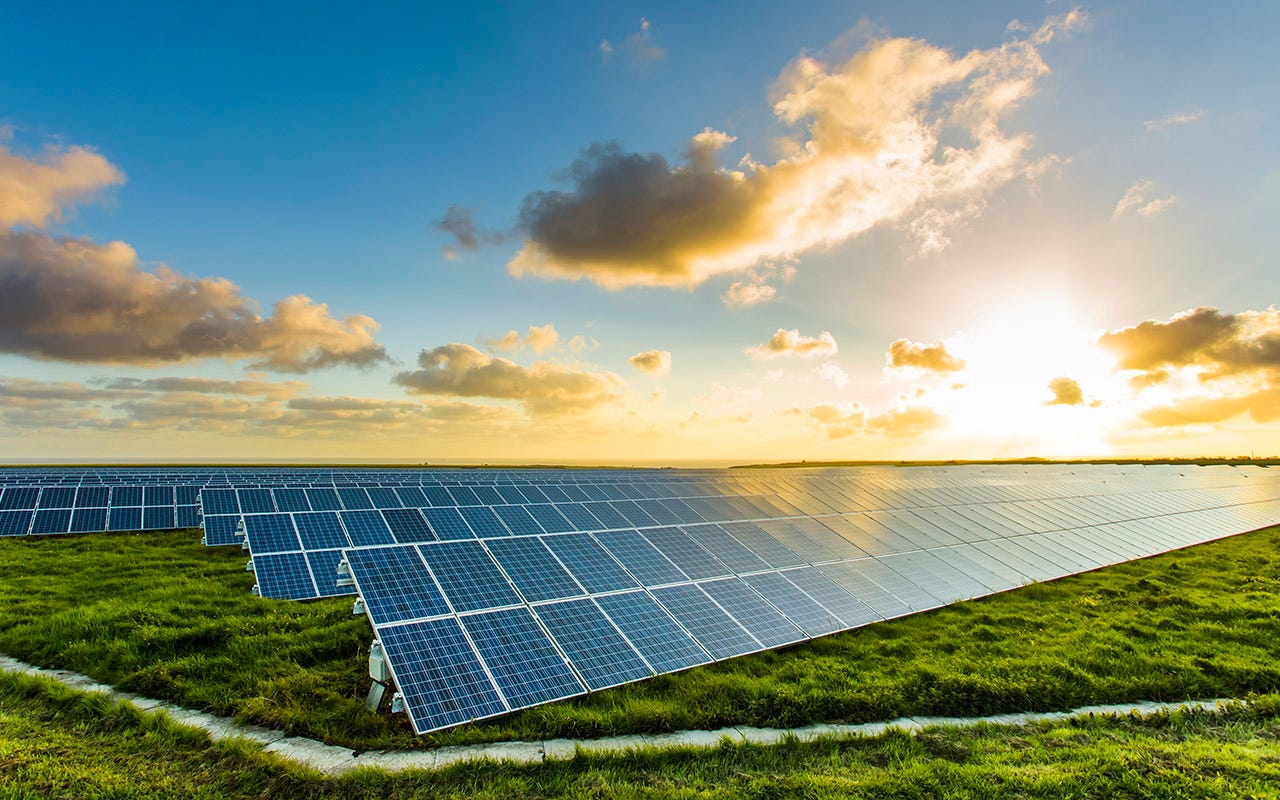
Large solar farms require unfathomable amounts of land. Utility-scale solar farms in particular can span for thousands of acres. Currently, Even the community-scale solar farms can use 10-20 acres per small neighborhood they are powering. This land usage does not come without a cost. It contributes to deforestation, which takes away the habitats of local biodiversity and removes the carbon sinks that are already present in the natural environment. Additionally, panels contain heavy metals that are harmful to the environment when disposed of incorrectly. Finally, there is growing contention between solar farms and small agricultural producers, which puts two sectors necessary for improvement in the climate crisis at odds with each other.
One major part of the green movement includes moving away from industrial agriculture in order to reduce methane emissions. This, however, is not possible if small farmers have to engage in constant legal battles with solar corporations in order to claim the land they need to execute regenerative agricultural practices. In Annapolis, Maryland, there is an ongoing battle between solar companies and small farmers over the historic Naval Academy Dairy Farm. Solar companies have proposed turning that area into a solar farm rather than testing if the area is productive. This takes away a huge opportunity for farmers to produce on that land and use it as a space to teach and learn.
Overall, large solar farms not only harm the environment, they also prevent progress in the agricultural sector and harm small farmers, who are actively healing our agricultural sector. In the 2024 election, we saw the harmful effects of greenwashing, which ultimately led to farmers and rural communities turning out for Trump in the polls. Solar farms are actively contributing to factory farming; it is not large corporations that have issues fighting legal battles over land. Solar farms, like the one fighting for land in Annapolis, remove potential jobs and community-building areas from working-class and rural individuals by restricting small and community-level farms.
Too often, the left overlooks major nuances of climate and human health and how agriculture fits into this when taking quick and decisive action. There is a push to find a quick fix to an issue that requires meticulous thought and the inclusion of everyone that it affects no matter their party, class, or occupational background. This reflects a larger structural problem that turns important issues into something to profit from. What could be impactful movements become exclusionary and steamroll local communities in the pursuit of what they deem the ‘greater good.’ By doing this, however, they work directly against their objectives and turn more and more essential actors and groups away from the importance of addressing certain issues. Exclusion from developments on the left, such as solar farms, can push small farmers to the right. The failures of the left make it seem like the issue can be solved with right-wing policies. The enemy, however, is not the left. It is the commodification of social issues by big business; the enemies are billionaires and large corporations, which are entities that right-wing policies support rather than deter. Not all solar farms are a part of large corporations and I think it important to highlight these groups. Although the left is failing small producers in some respects, there are left-wing solutions.
It would be easy to say that the solution is to include everyone and consider the effects of certain aspects of the green movement, but I am not naive. By attempting to steamroll nuances by declaring a quick fix to a systemic issue, I would commit the same tragic fallacy that I am critiquing in this article. Therefore, I want to focus on solar farms. I want to clarify that I am not necessarily anti-solar or anti-renewable energy. I do think that solar is extremely beneficial in reducing carbon output and being a more accessible form of renewable energy. Nor do I doubt that many in the solar industry take environmental impact incredibly seriously. This was demonstrated by my conversation with Jatin Khanna, who worked in the solar industry for over seven years. That being said, I think there are major oversights, especially in working together with regenerative agriculture to reduce emissions and we need to work for a balance between these two areas of the environmental movement.
We can circumvent the need for hundreds of acres of land by incorporating solar panels into our infrastructure. By placing panels on buildings and putting solar canopies over parking lots, we can power buildings with solar energy without excess deforestation or land disputes. This is a more expensive option and would require financial support from the government, however, it moves closer to that balance we are searching for. It also would require more infrastructure planning, but it would promote green energy sources without preventing progress in other sectors that are necessary for progress in the green movement. Additionally, there are plenty of examples of regenerative agriculture and solar working together with animals coexisting and thriving with solar panels or crop health being improved by the presence of panels. Regenerative agriculture and solar do not have to be at odds with each other, yet currently, they are. This could be solved with cross-involvement between the communities and more infrastructure planning with support from local governments.
 |
|